After the Storm: Harris County’s Battle against Nature’s Aftermath 🌪️🧹
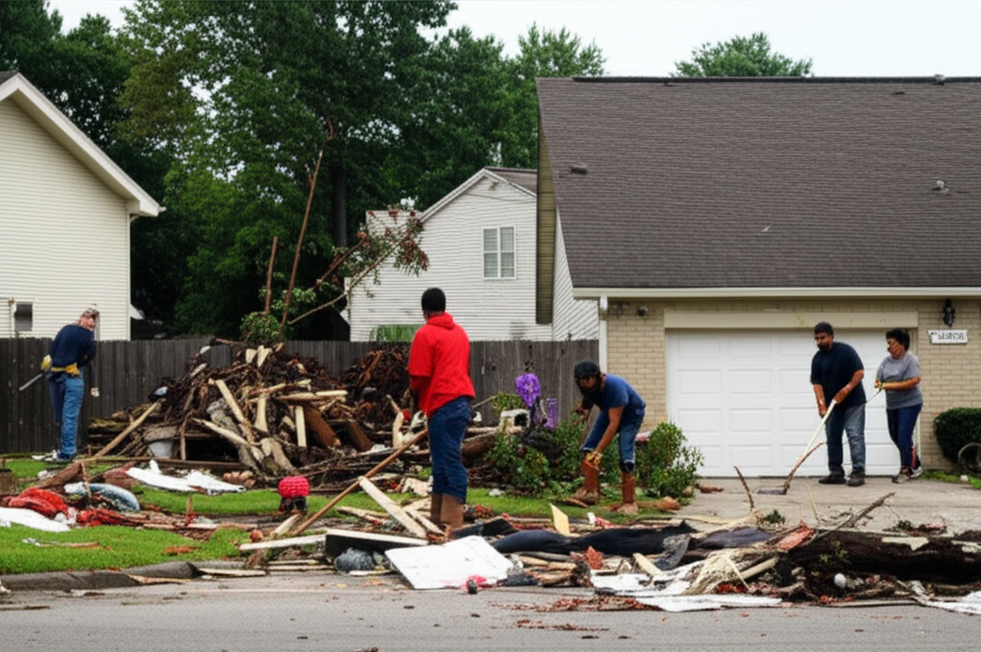
In a scene that resembles a fractured dream, the residents of Harris County awaken to find their neighborhoods transformed into landscapes of chaos and disarray. Fallen trees, uprooted by nature’s fury, lie like silent sentinels over closed roads, serving as reminders of the recent tempest that unleashed both fury and fragility upon the community. As county crews work diligently to untangle the mess, one must ponder: how does a community rebuild when nature has taken such a heavy toll? 🏡
Irony drips slowly from the branches of the thick oaks, still standing amid storm debris. While nature’s savage outbursts often aim to destroy, they inadvertently bind communities together in acts of reclamation. Streets closed by the very trees that once offered shelter now invite an outpouring of human spirit. For the residents caught in this dichotomy, roads not traveled become pathways to resilience and renewal; an expression of the triumph found in teamwork amidst adversity.
The Battle Against Nature’s Aftermath
The immediate response to the storm is a tableau of public service in action. Crews, clad in fluorescent vests and driven by determination, scurry like industrious ants, systematically clearing the debris from roads. Their task is akin to searching for gems in a field of rocks; heavy machinery whirs and beeps as it excavates timber and twigs, linking neighbors to the hope of restored passage.
According to the Harris County Flood Control District, more than 75% of local roads became impassable after the storm, creating a logistical nightmare for emergency services and everyday life. The juxtaposition between chaos and community support is palpable—how can a single storm so swiftly unite a neighborhood when it has also chosen to wreck havoc?
Harris County experienced over 15 inches of rain in just 48 hours, resulting in the emergency declaration, and over 500 crew members mobilized to assist in recovery operations.
Community Resilience: An Unyielding Spirit
Outside the cyclone of cleanup efforts, a more profound narrative unfolds: the emblematic resilience of the community. Residents, who are at once victims and volunteers, sweep away memories of destruction, transforming acts of despair into human connection. Much like a tapestry, where individual threads come together to create something greater, the unity demonstrated in the wake of the storm underscores an important tenet: strength is often forged in shared adversity.
This storm response effort brings to mind a particular anecdote, reminiscent of those small-town gatherings after a catastrophe. As neighbors connect and share stories, they offer not only physical assistance but emotional support. One resident even set up a makeshift refreshment stand, handing out free water bottles to the cleaning crews—a quintessential example of how the spirit of humanity can turn the bleakest circumstances into a celebration of communal fortitude.
Infrastructure vs. Environment: The Irony of Progress
Yet, amid this resilience lies the sharp antithesis of infrastructural inadequacies that are now unmasked. Roads that buckle under nature’s weight reflect a broader discussion about flooding and climate change’s relentless grip. Curiously, while advances in urban planning often prioritize aesthetics over practicality, nature remains the ultimate architect, reminding us that its blueprints cannot be so easily altered by our own designs.
As roads close off their access, they highlight the vital question: is the very framework meant to protect us becoming a liability? If streets become susceptible to storms, what does that say about our urban designs? In an age marred by climate unpredictability, perhaps the real cleanup challenge lies not just in collecting debris but in redefining our relationship with the environment—transforming it from adversary to ally.
The Road Ahead: Lessons Learned
The aftermath of storms serves as a stark reminder that challenges can shape communities. As cleanup crews make significant strides—scooping up branches and restoring roads—the narrative expands into a larger discourse on preparedness and adaptation. Will Harris County emerge from the wreckage with a clearer vision for its infrastructure that prioritizes sustainability? 🌱
With the final truckloads of debris destined for recycling and disposal, one wonders if the true metric of recovery isn’t merely restoring the roads but reviving community spirits and reinforcing an unspoken bond of resilience. The storm may have closed roads, but it opened pathways for connections, transforming nature’s reminders of havoc into inspiration for healing. The paradox reminds us: sometimes, it’s in our darkest hours that we discover our brightest strengths.