Houston’s E-Scooter Curfew: The New Daybreak Dilemma of Micromobility 🛴🌙
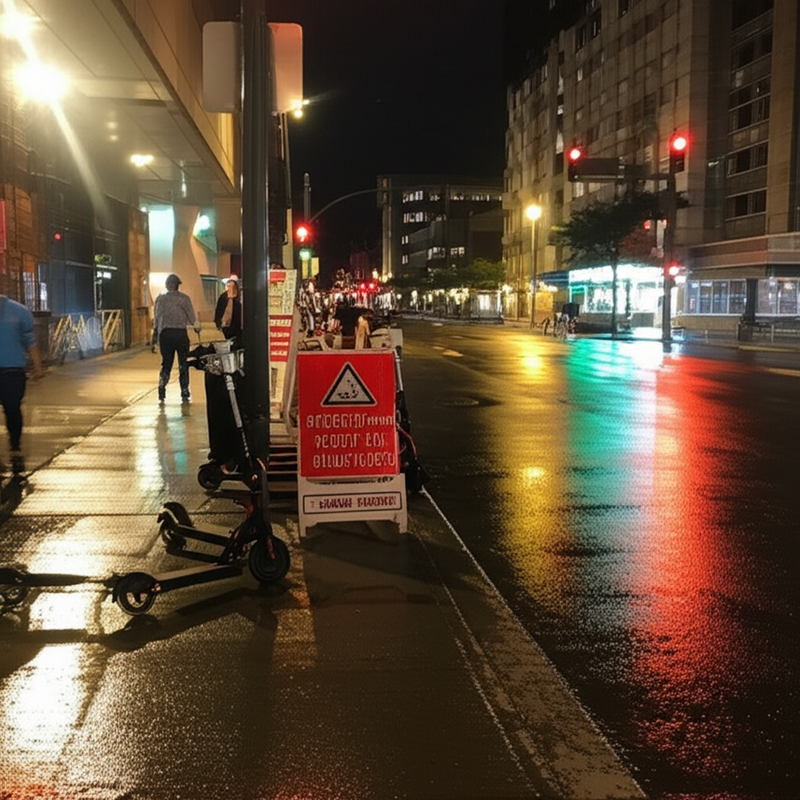
In a city famed for its perpetually shifting skyline and relentless urban sprawl, Houston has decided to dim the neon glow of its electric scooters each night. Authorities recently approved a curfew for e-scooters and micromobility devices, sending a sharp message: these nimble wheels are welcome only between 6 a.m. and 10 p.m. But in a metropolis where the traffic never truly sleeps, isn’t this a somewhat curious constraint? Who decided freedom rides better with a bedtime? ⏰
Houston’s embrace of micromobility devices – e-scooters, e-bikes, hoverboards – was once hailed as a progressive dance, an elegant solution to clogged arteries of car traffic. Yet the recent night-time restrictions feel like a morning-after hangover, a somber rebuke to the very innovation they sought to invite. Herein lies a striking antithesis: a city that cherishes forward movement is now legislating moments of stillness for those who ride it smoothly on two wheels.
Micromobility’s Rise: Convenience or Chaos? ⚡🚦
It wasn’t too long ago that the sight of self-propelling scooters peppering sidewalks was a novelty, new-age chariots promising quick, cheap, and carbon-light rides through Houston’s neighborhoods. Yet the honeymoon was fleeting. Complaints of accidents, sidewalk crowding, and scooter abandonments sparked concern — not unlike the way a barking dog suddenly finds itself tied to a post.
The irony here is palpable: micromobility was supposed to be the antidote to traffic congestion and urban pollution, a glimmer of hope swirling in the smog-filled air of automobilized cities. Instead, scooters have become, for some, a source of frustration and even fear. Accidents involving e-scooters rose dramatically nationwide – about 39,000-related emergency room visits in 2019 alone, according to the CDC – painting a picture as chaotic as a Texas thunderstorm in July.
Houston’s city officials argue that imposing a night curfew for these devices is a measured response to public safety concerns. It’s a classic tug-of-war between public good and personal freedom, where the line between risk and regulation is as thin as a scooter’s deck.
The Curfew: An Unexpected Scythe on Freedom’s Handlebar 🌒🔒
The newly minted curfew prohibits e-scooter and micromobility device use between 10 p.m. and 6 a.m. The rationale? Reduced visibility at night, higher accident rates after sundown, and a sharp spike in incidents tied to intoxication and impaired judgment. It’s a grip strangely reminiscent of earlier eras when cities imposed curfews for trams and even bicycles, as if history folds over itself in an endless loop.
“It’s ironic how in the age of LED-lit handlebars and GPS-tracked rides, our city has decided the safest journey is no journey after dark,” laments one resident.
But what does this curfew mean for the countless Houstonians who rely on scooters for night shifts, social outings, or simply as a personal mode of freedom? The restriction casts these riders into a curious gray zone, where innovation meets inertia, and a slick, battery-powered scooter becomes a powerless piece of street furniture.
Data and Debate: Weighing Safety Against Access
Nationally, e-scooter injuries have shown a tendency to increase after dusk. A 2022 study by the University of California found that more than 60% of scooter injuries occur at nighttime, bolstering the argument for curfews. Houston’s decision aligns with this safety-first principle but also triggers questions about equitable access to urban mobility.
The question is: does shutting down scooters after dark inadvertently marginalize those who cannot afford cars or public transit at off-hours? Or does it encourage a safer, more disciplined use of these devices — a “slow down to survive” approach? The tension is much like a skateboarder halted mid-air — balancing on what might have been a smooth, exhilarating ride.
Why Not Just Street Lights and Helmets?
One might muse whether better lighting, stricter helmet enforcement, or dedicated lanes could cultivate safer nighttime scooting without resorting to an outright ban. But here the policymaker’s dilemma is like trying to untangle earbuds from a pocket — every solution creates new knots of challenge.
Micromobility’s Paradox: Freedom Bound by Rules 🌀🏙️
The story of Houston’s e-scooter curfew is, in essence, the story of micromobility itself: a bright, nimble force meant to expand personal freedom clashing with the gritty realities of urban street life. Like a flame that flickers beautifully but must be shielded from the gusts, micromobility needs guardrails to survive.
From pedestrian complaints about cluttered sidewalks to the surge in impaired riding injuries, the contradictions pile like rush hour traffic. It begs a deeper reflection: when does the promise of micro-transportation morph into micro-turmoil?
The Texas heat may scorch asphalt, but it can’t burn away the paradox of a city wanting to accelerate into the future while pressing pause when the sun sinks. Houston’s curfew turns a spotlight on a dilemma bigger than itself — the struggle to reconcile innovation with safety, accessibility with control.
And so, while these electric scooters rest in nocturnal dormancy, the city keeps spinning, an urban dance of progress and caution twirling through the Texas night. Will this pause curb harm or simply shackle convenience? Only Houston’s streets—as merciless and unpredictable as a wild prairie wind—can decide.
Épilogue: The Quiet Ride Ahead
The curfew may signal a temporary retreat, but the micromobility revolution is far from extinguished. Navigating between regulation and freedom, Houston’s experiment serves as a vivid reminder that every mode of urban transport carries the inherent tension of risk and reward — a paradox coiled as tightly as spring-loaded handlebars, awaiting the right moment to propel us forward.
After all, is not progress merely the art of balancing on a razor-thin edge—sometimes on two wheels—under the stars?